Invasive Knotweed Control
Invasive Knotweed Control & Pesticide Use Permit
T’Sou-ke Nation has been issued a Pesticide Use Permit (#402-0694-25-28) from the Province of BC in order to control highly invasive knotweed located on the banks of the Sooke River and tributary rivers.
T’Sou-ke Nation is collaborating with the District of Sooke and the Capital Regional District to support the coordinated management and eradication of these invasive species. Treatment is anticipated in July and August 2026, with subsequent treatments up to twice per year in the summer through summer 2029.
Frequently Asked Questions
What is Knotweed?
Knotweed is considered one of the world’s worst invasive plants. Knotweed refers to four species of non-native, perennial rhizomatous (horizontal underground stems) plants invasive to British Columbia (B.C.): Japanese (Reynoutria japonica), giant (Reynoutria sachalinensis), bohemian (Reynoutria x bohemica), and Himalayan (Koenigia polystachya). Knotweed species are extremely aggressive invasive plants with a very large and deep rhizome system that can be up to 3 m deep and 20 m across.
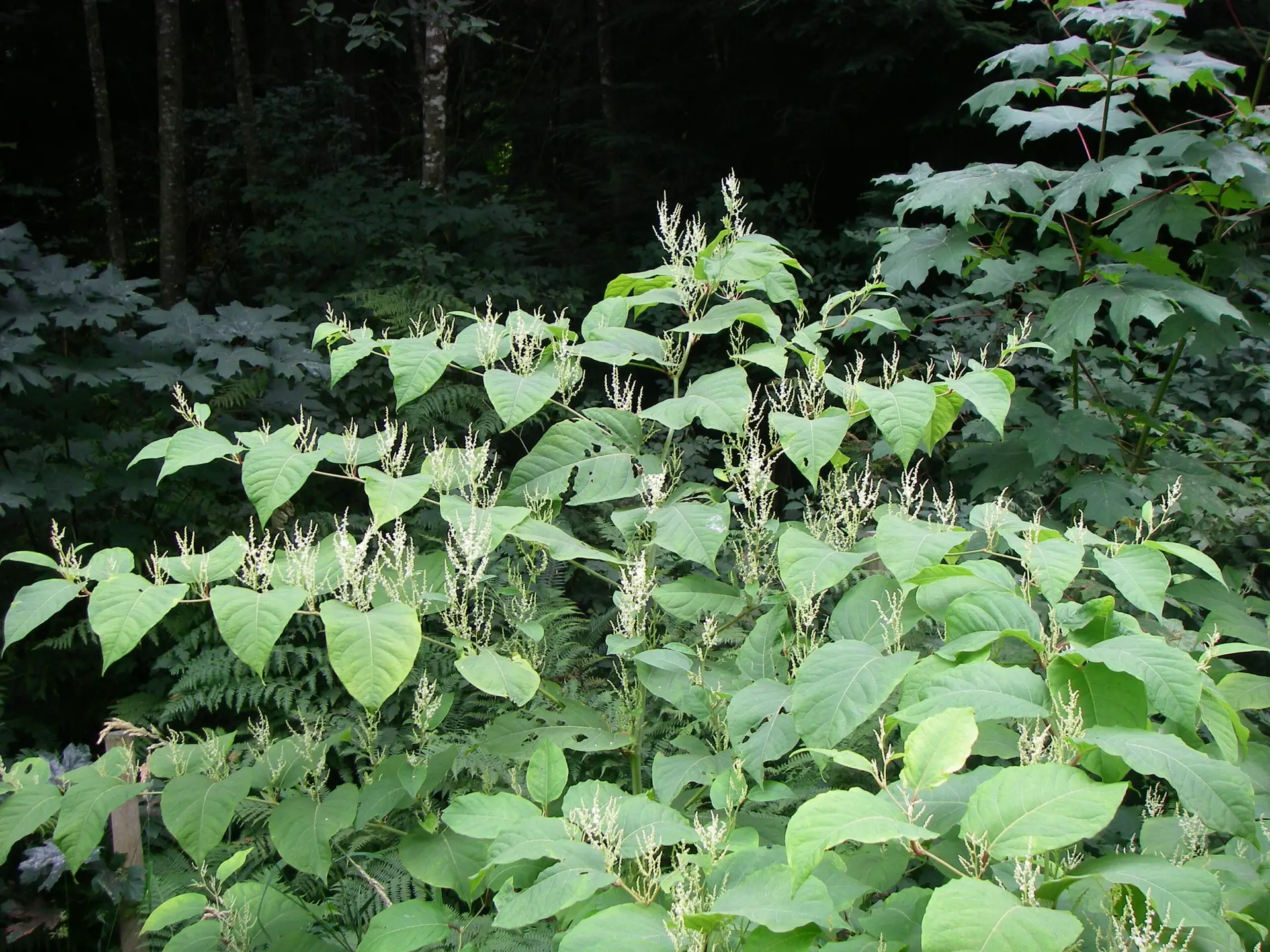
Photo Credit: Capital Regional District
Why is knotweed a problem?
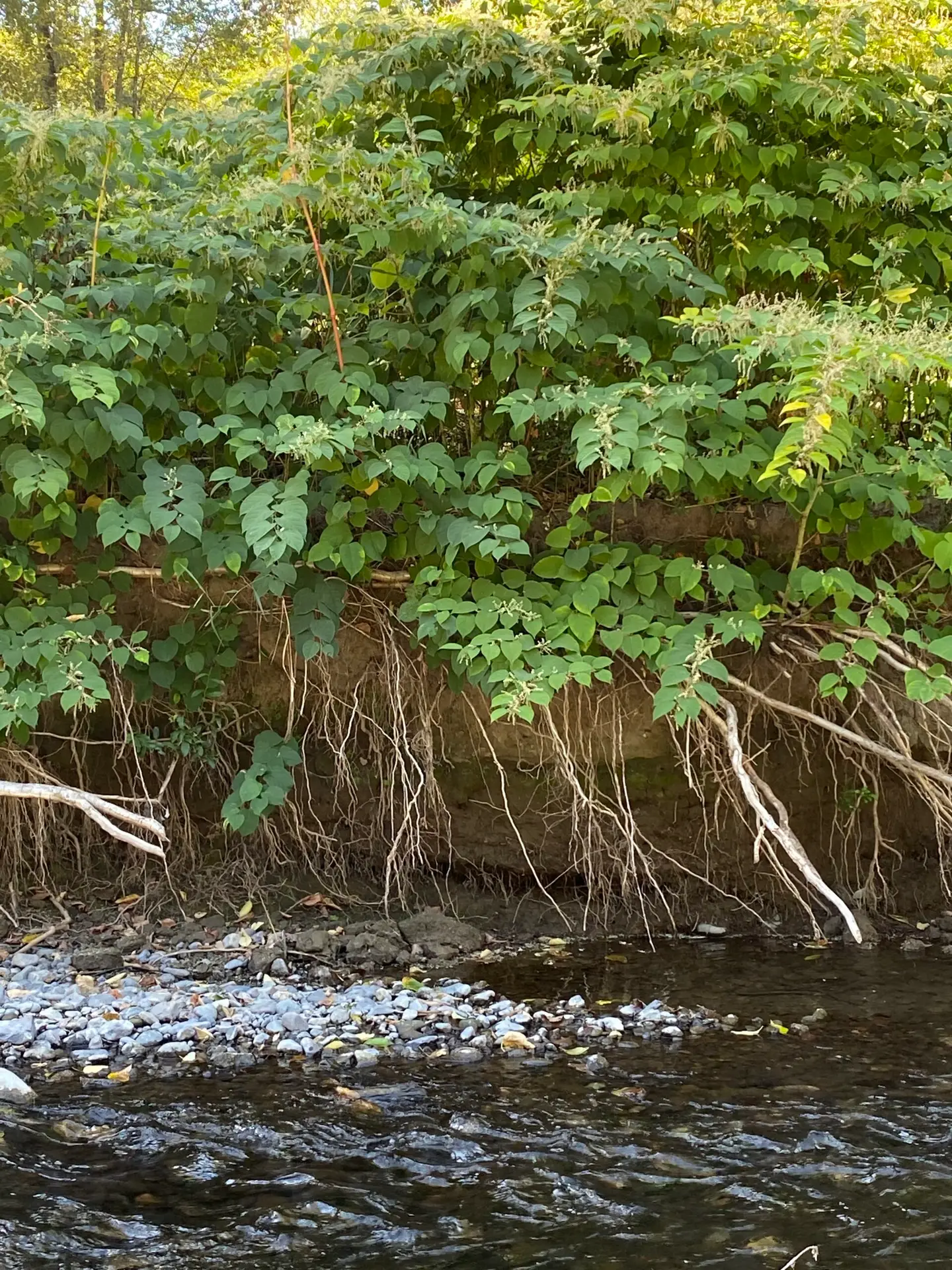
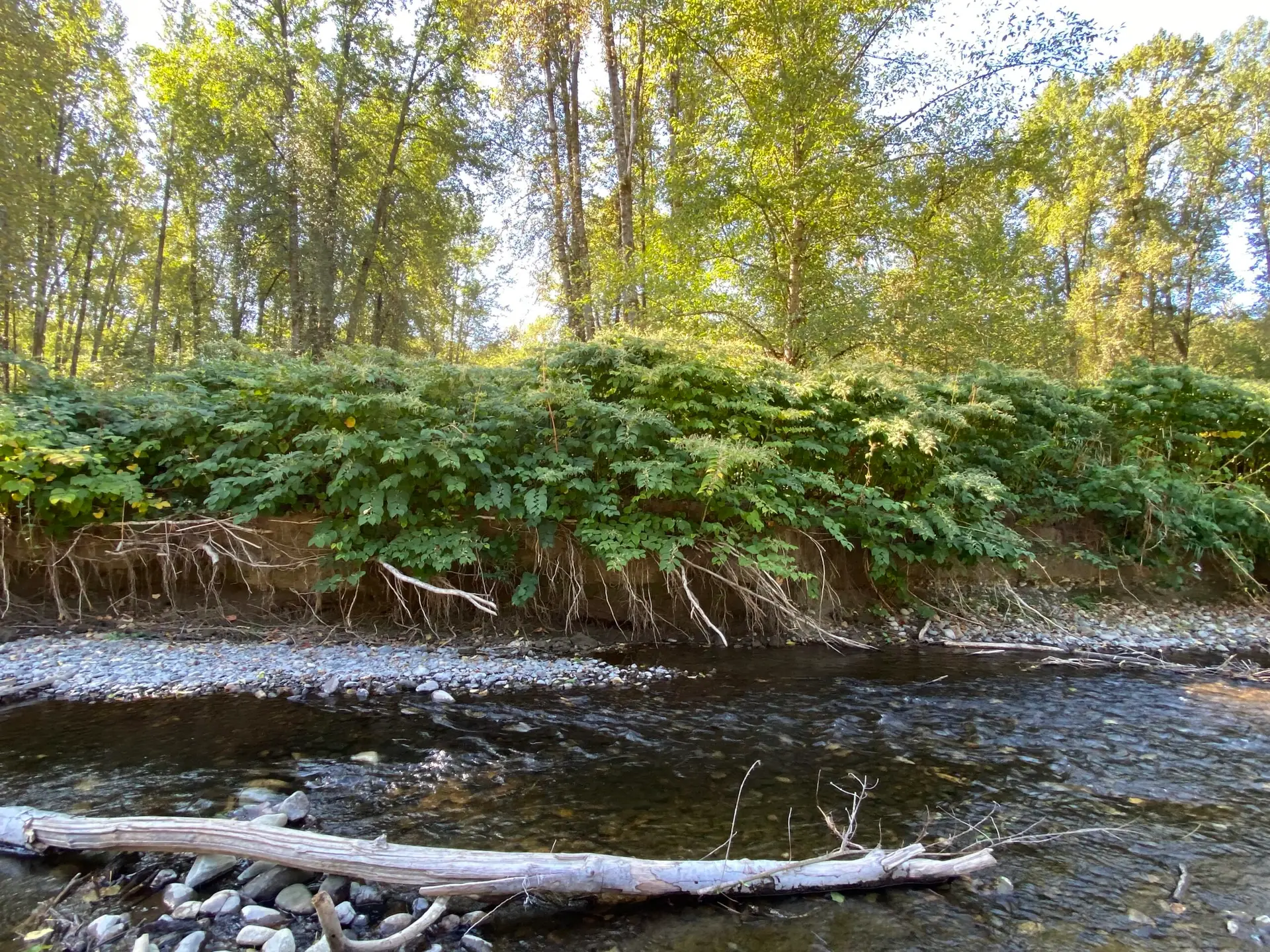
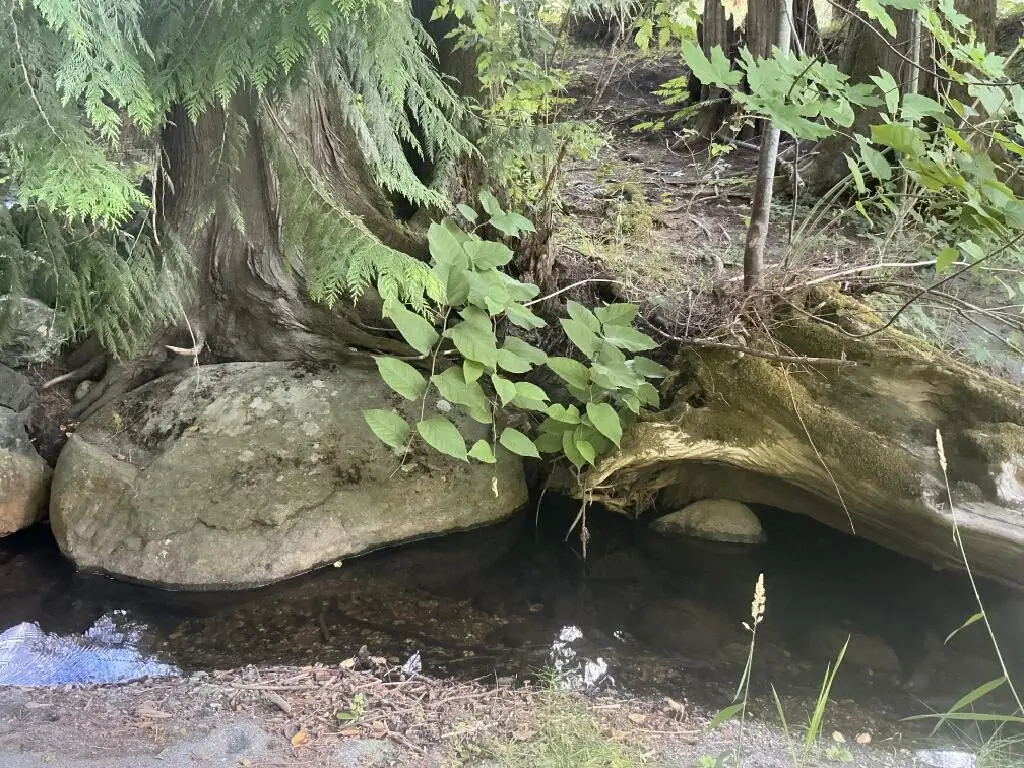
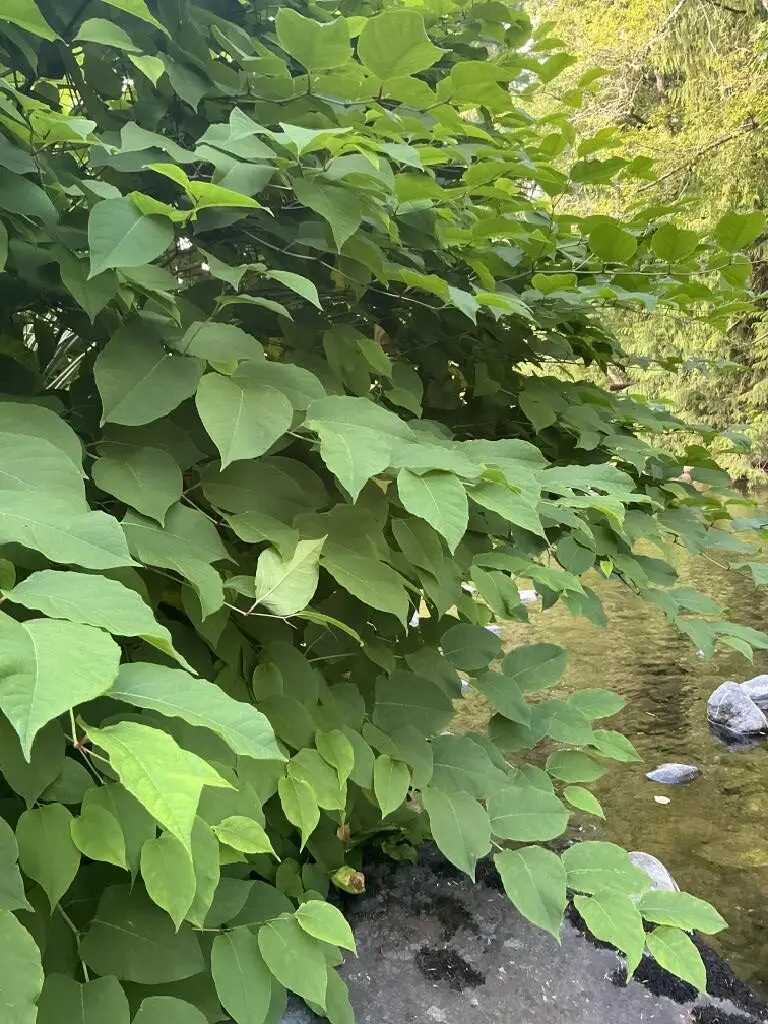
Knotweed readily establishes on stream banks, lakeshores, gravel bars, and other open areas. Negative impacts of this include displacing native vegetation, degrading water quality and fish habitat by eroding stream banks, and reducing access to water for wildlife and recreation. Knotweed can compromise the integrity of above and below ground infrastructure (e.g. bridges, retaining walls, septic system). Knotweed has numerous impacts on riparian and aquatic ecosystems such as:
- Reducing nutrient cycling by locking nutrients in its root system;
- Increasing sedimentation into streams and rivers via bank erosion;
- Altering drainage patterns and increasing the risk of flood by damaging infrastructure or obstructing flows; and
- Outcompeting riparian vegetation reducing plant diversity and altering the input of detritus (which is food for fish and invertebrates) into water systems.
Sporadic occurrences of knotweed have already infested a 2.3 km stretch in and adjacent to the Sooke River. In the absence of treatment, knotweed has the potential to dominate gravel bars and riverbanks along the Sooke River and its estuary, with devastating impact to salmon and other cultural and ecological values.
What does knotweed look like?
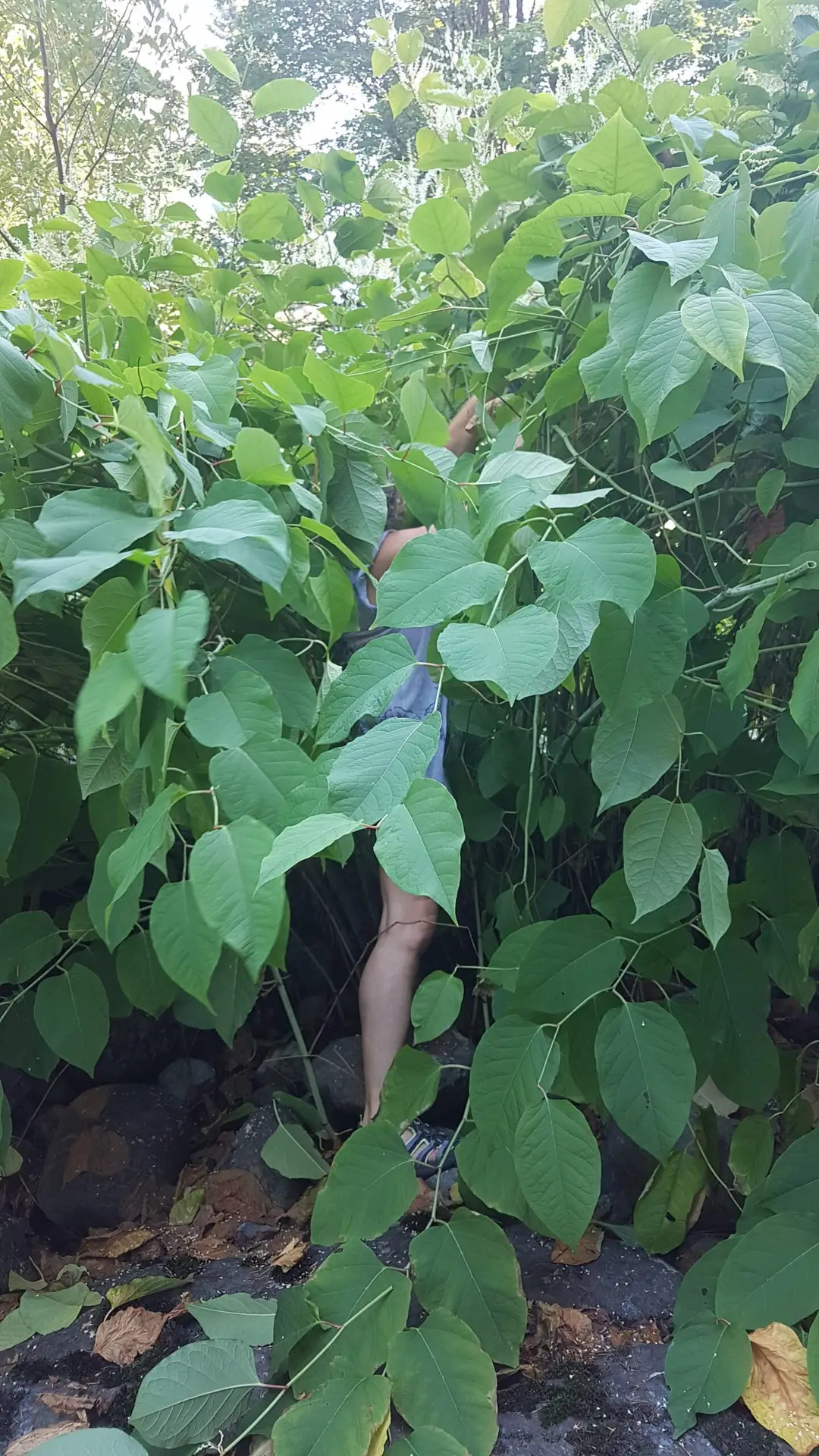
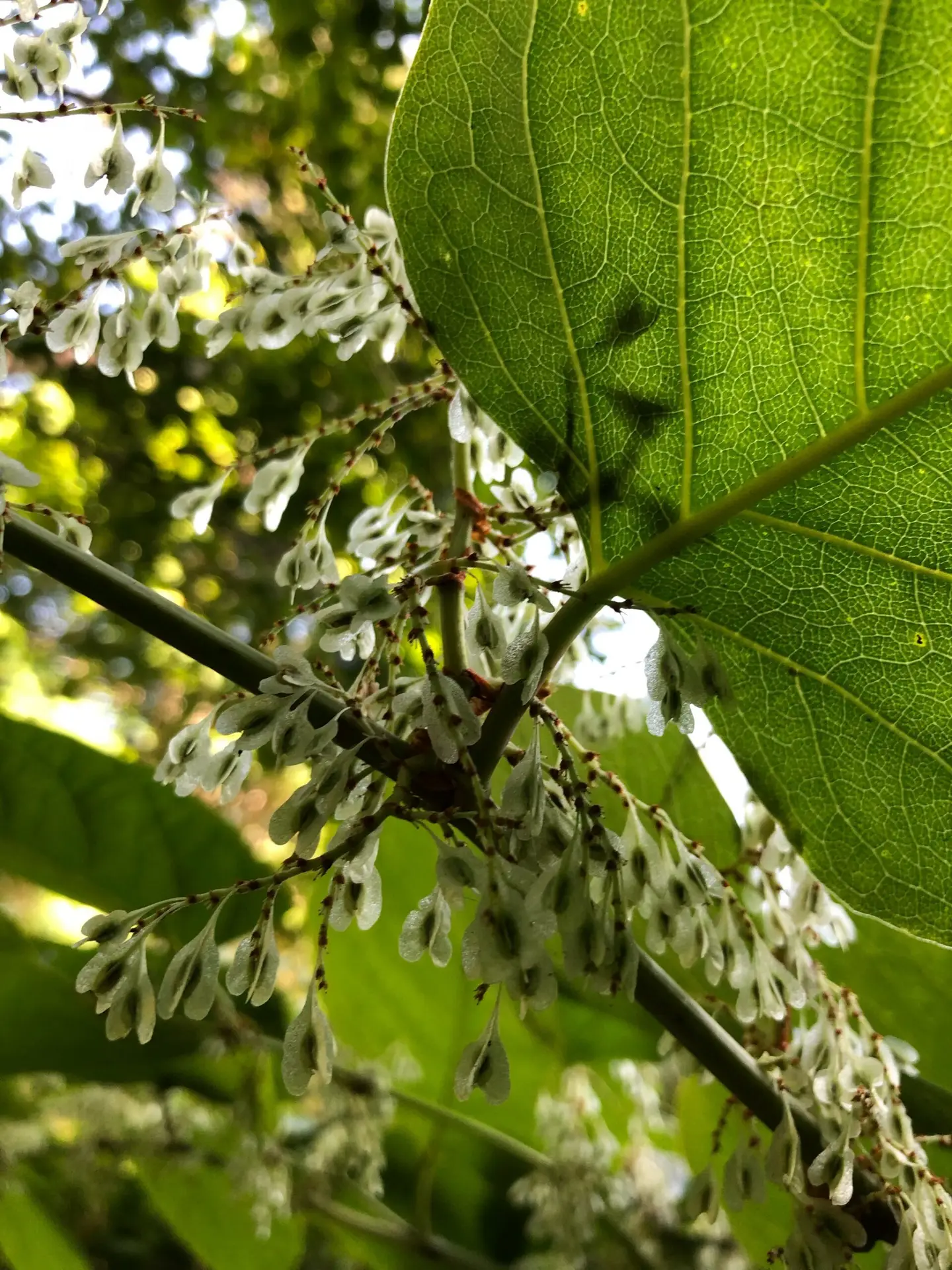
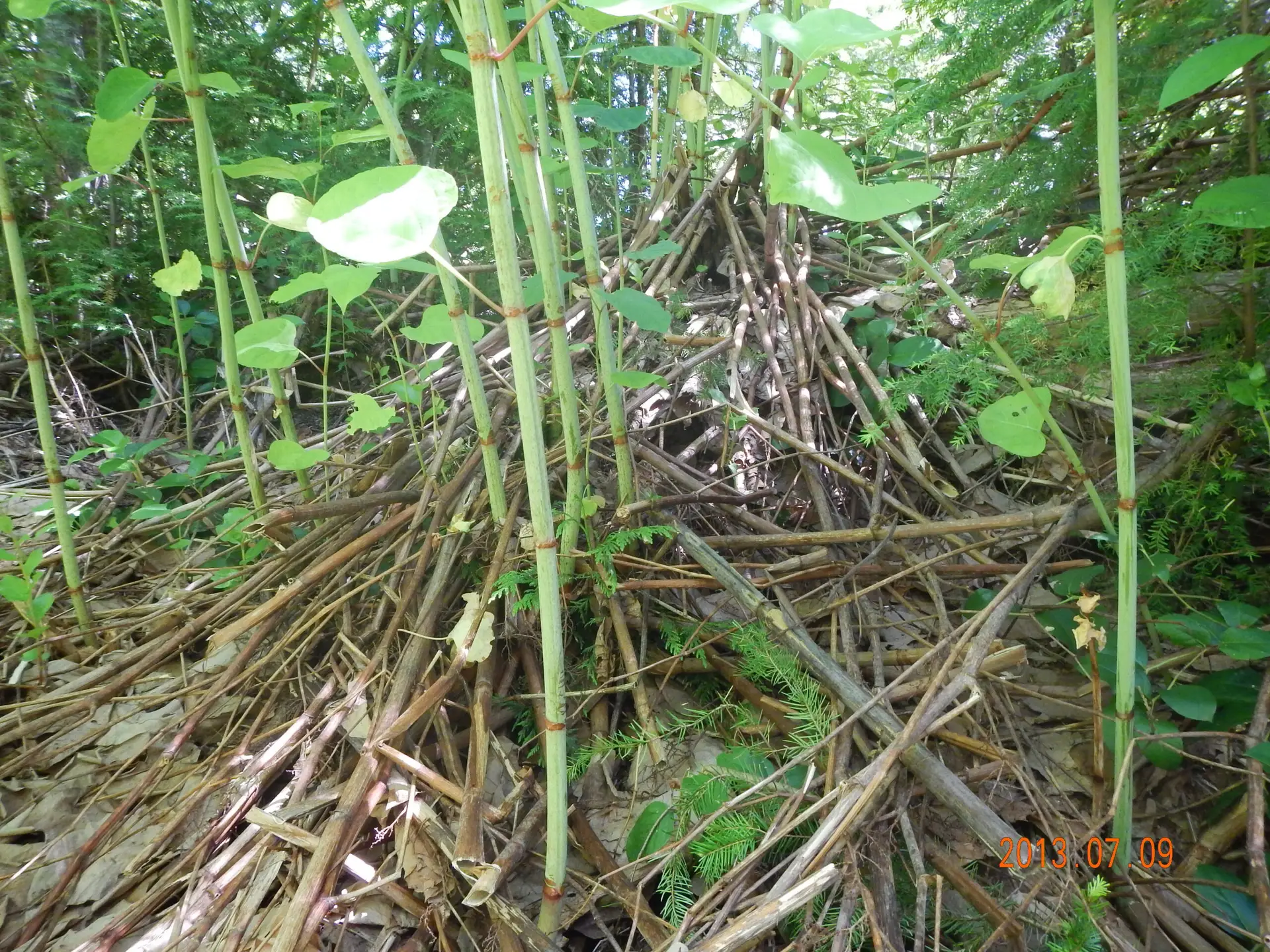
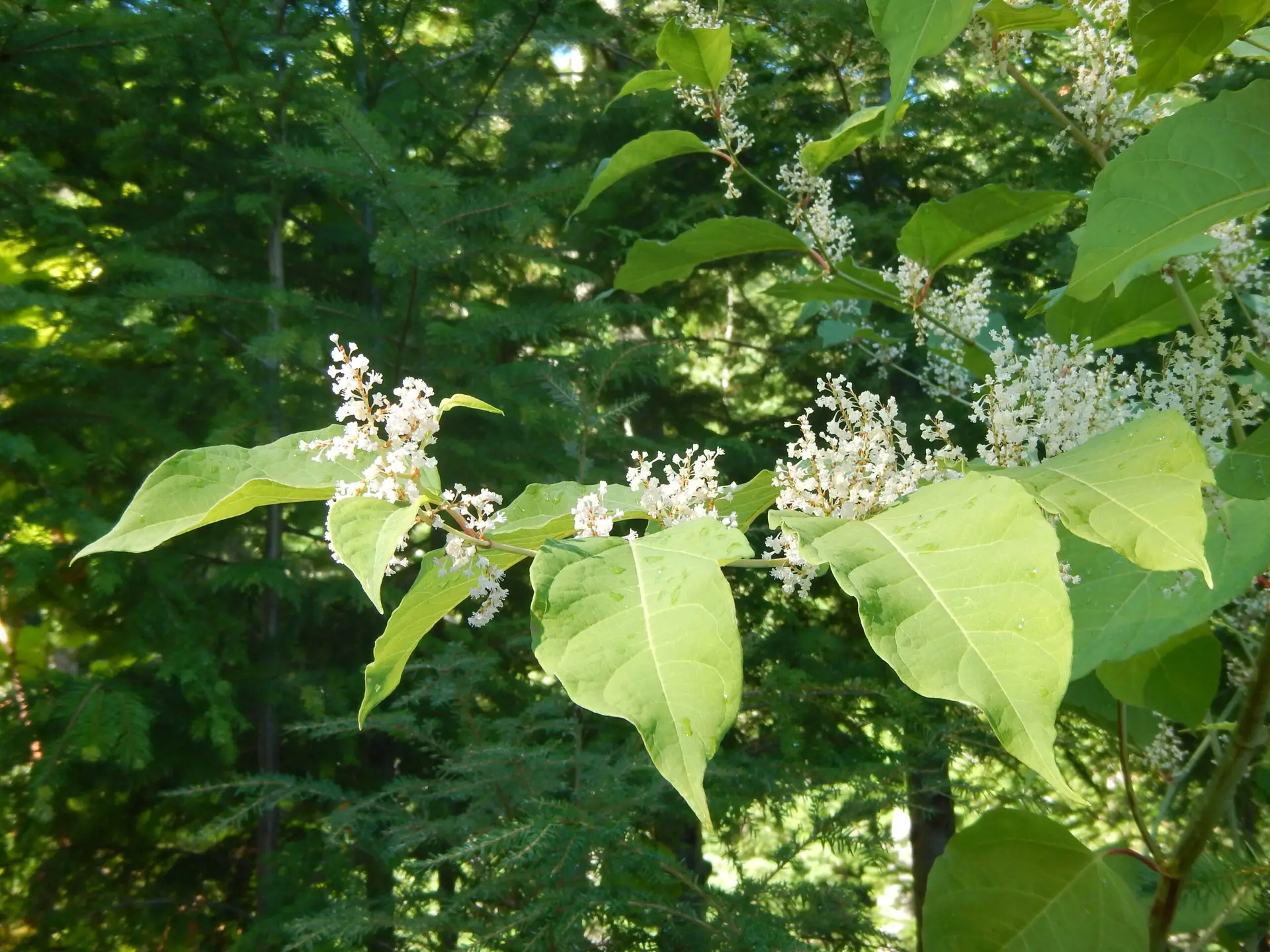
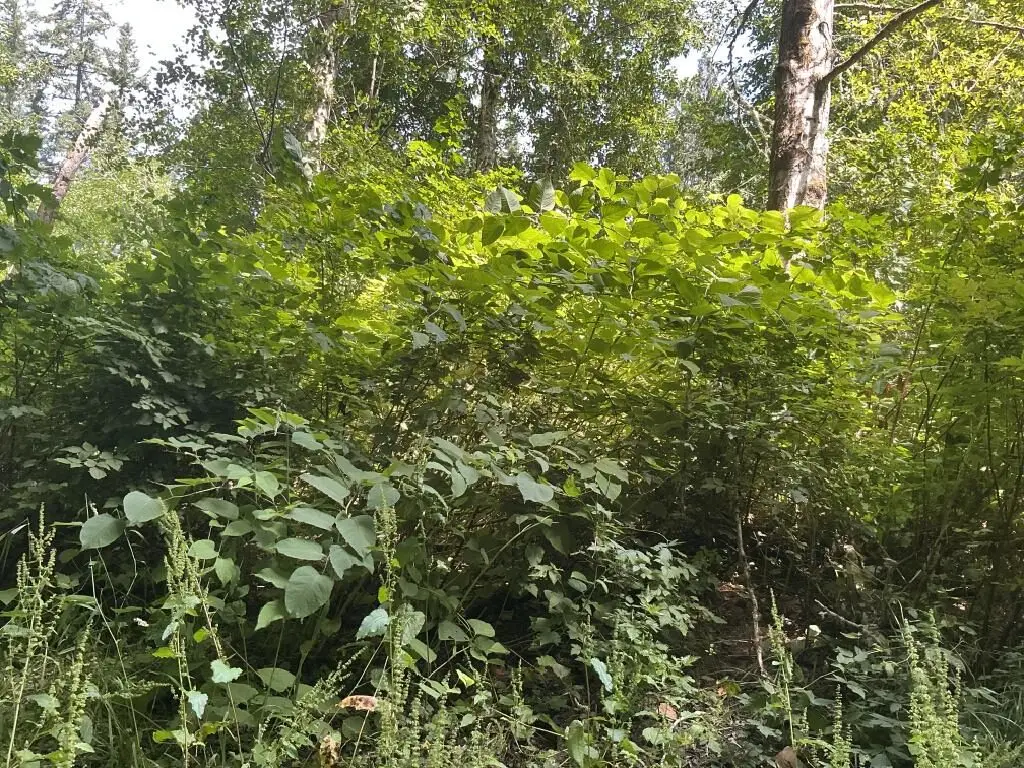
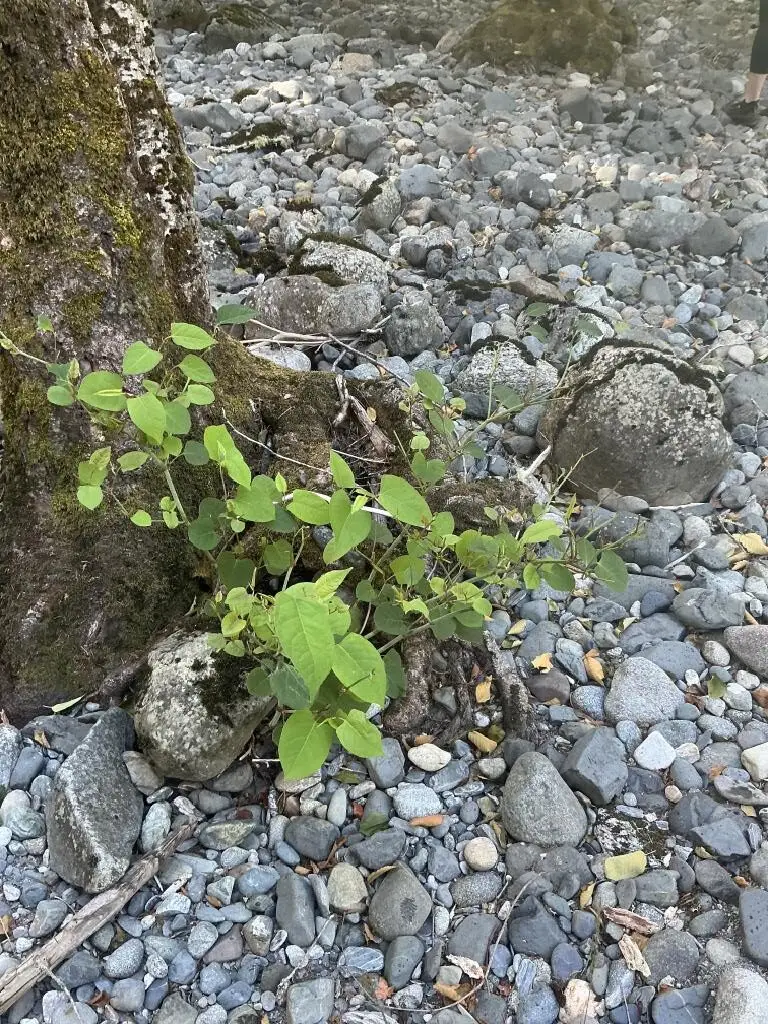
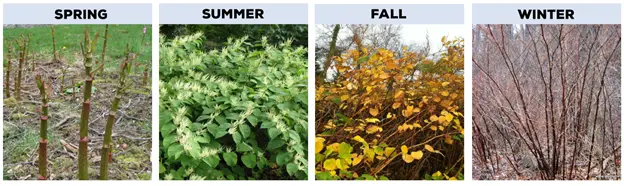
Knotweed species have hollow stems that can rapidly grow 1 to 6 m tall and form dense clusters resembling bamboo. Young knotweed shoots appear similar to red asparagus. As they mature, large somewhat heart-shaped leaves turn bright green before becoming yellow mid- to late fall. At the first hard frost, the aboveground parts of the plant die, leaving bare, grey-brown stalks, while roots and rhizomes overwinter underground. Knotweed’s extensive network of roots and rhizomes can extend up to 20 m horizontally and reach depths of 3 m. Knotweeds have smooth-edged leaves that vary in size and shape depending on the species. Knotweeds develop small greenish-white, white or pinkish-white flowers in July to August; however, not all plants will produce flowers.
More information on how to identify knotweed can be viewed here: Key to Identification of Invasive Knotweeds in British Columbia.
Where does knotweed grow?
Knotweed plants are commonly found in riparian areas, along stream banks, roadside ditches, and in other areas with high soil moisture, such as wetlands, forest edges, trails, and private gardens. It should be noted that knotweed can tolerate a wide range of site conditions and can also establish on disturbed, saline, shaded, well-drained, high-elevation, rocky or paved areas.
Where is knotweed found on the Sooke River?
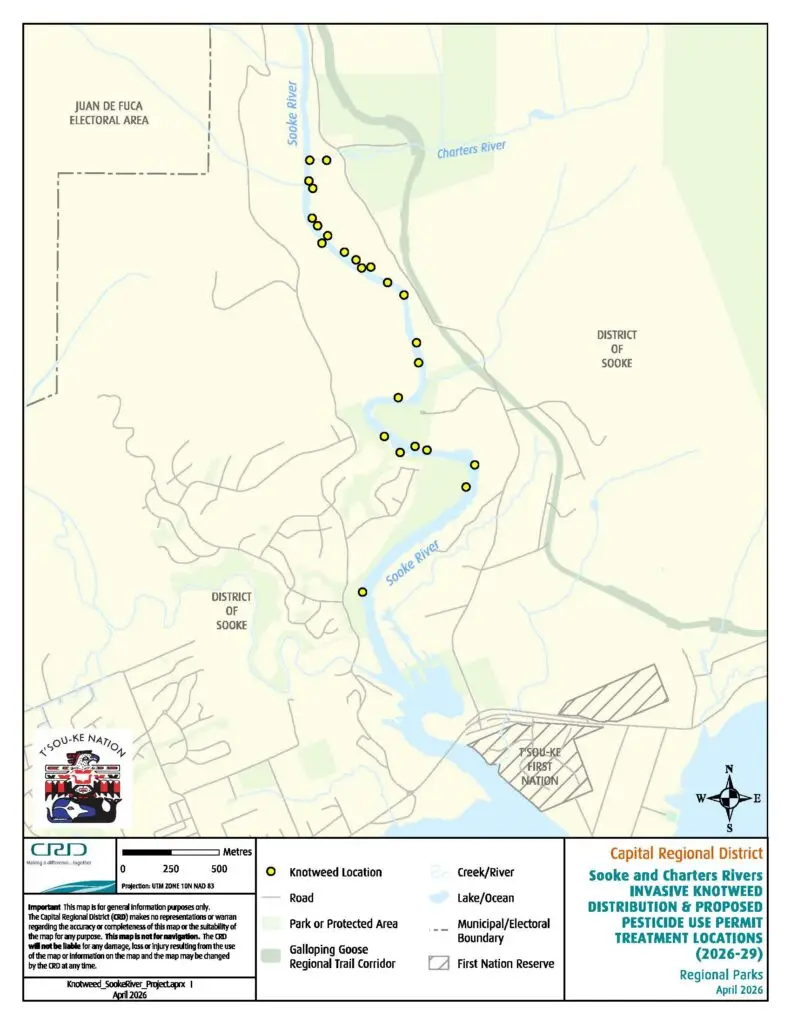
Along the Sooke River system, knotweed is currently limited to a total area of 0.15 hectares along 2.3 km of the river, from the confluence of the Sooke and Charters Rivers downstream and is working its way to the ocean.
How does knotweed spread?
Knotweed typically spreads via stem and root fragments, and in the case of bohemian and giant knotweed, by seed. Rapid spread of knotweed is due to its ability to sprout new plants from fragments as small as half a centimetre in length. Local dispersal occurs mainly in water currents. Long distance dispersal is mainly through human dumping of garden waste or movement of knotweed infested soil. Knotweed reproductive plant parts (propagules) can also spread on clothing, boots, equipment, tools, machinery, and vehicles. Knotweed regrows vigorously following cutting, mowing, and digging, especially early in the growing season. Such treatments stimulate the production of new shoots from the root system. Seasonal high-water events and floods sweep knotweed fragments into waterways, rafting them downstream to deposition points where these fragments root and form new colonies on banks and gravel bars. Since knotweed grows faster than most other plant species, it quickly out-competes native riparian vegetation essential for ecosystem health and salmon habitat.
What are the treatment options for controlling knotweed?
Mechanical Control: Cutting, mowing, digging or grazing may be effective for new, isolated, and very small infestations of knotweed, if continually applied using multiple treatments annually over a number of years and properly monitored. In general, mechanical control on its own is not an effective management tool for knotweed species due to their massive but fragile root structure and ability to reproduce from small root and stem fragments. Manual control is only recommended under very specific circumstances, for small, newly established sites with readily excavatable soils on accessible sites and should be carried out with extreme caution due to the likelihood of spread. Material must be properly disposed of to prevent regrowth and spread. Partial mechanical treatments will encourage denser knotweed growth and spread.
Biocontrol: Biological control, or biocontrol, is the use of an invasive plant’s natural enemies—chiefly insects, parasites and pathogens—to reduce the plant population below a desired level. It is a long-term, self-sustaining treatment method for managing invasive plants that will not eradicate the target plant but will regulate the plant population and reduce impacts. For knotweed an insect called sap sucker psyllid, Aphalara itadori, is being studied as a primary biological control agent in British Columbia and agent establishment is being undertaken and closely monitored in select locations. However, at this time, there are no known effective biocontrols available for knotweed.
Chemical Control: Careful selection of suitable herbicides and application methods can result in chemical treatments providing effective, selective control of target plants with minimal to no impacts or disturbance to the surrounding environment and species. As with all methods, treatments should be monitored for efficacy and follow-up treatments may be needed to control re-growth or new growth. Herbicide treatments are most effective during active, maximum plant growth. Generally, herbicide treatments will significantly reduce or eradicate a knotweed population within 3-5 years. The time required to eradicate a knotweed population will depend on the consistency of treatments and frequency of disturbance. For example, water flow may spread reproductive plant parts, prolonging the time required to eliminate a knotweed population. Suitable herbicides must be absorbed by the knotweed plant and translocated into the root system achieve control and reduce the plant; they may be applied using a variety of application methods, including foliar (leaf) spray and stem injection, depending on the site and product being used. Herbicide use must be considered on a site-specific basis, and labels must be followed at all times. All applicators on public lands must be certified and follow the requirements found in the BC Integrated Pest Management Act (IPMA), federal regulations, and any relevant local bylaws.
What is the most effective way of controlling knotweed?
Control methods need to suit the specific characteristics of each knotweed occurrence. As mentioned above, mechanical methods such as digging, mowing, and cutting may be suitable only for very small, new, isolated patches if continually treated and properly monitored and disposed of. These methods are not feasible for large, well-established infestations because it is very difficult to reliably isolate and remove all reproductive plant parts, especially all root fragments. Partial mechanical treatments will encourage denser growth and spread. Mechanical treatments such as excavation are increasingly costly, cause significant disturbance, sites may not be accessible in remote locations, and treatment does not reliably isolate and remove all root fragments. Mechanical treatments also create a new risk of spread in transporting and properly disposing of removed plant material and knotweed infested soil. Mechanical treatment is not a viable treatment in river environments with concreted tills and boulders throughout the growing sites. The targeted application of a suitable herbicide is the most effective means of controlling knotweed and protecting the adjacent environment. Herbicide treatment methods have high efficacy; active ingredients are moved by the plant itself into the root tissue. If viable reproductive plant parts remain in a location, consistent, ongoing monitoring and treatment of new growth (one to three times during a single growing season) is required to prevent re-establishment of the knotweed population until the population is confirmed eradicated.
Why is herbicide the preferred treatment method?
The Province of BC and the T’Sou-ke Nation cooperatively assessed the efficacy and suitability of all available treatment options for controlling knotweed on the Sooke River. It was determined that the targeted application of site suitable herbicides would be the most effective means of eliminating knotweed from the river system with the least impact to the environment of any of the treatment options, including the option to not treat the knotweed. Mechanical treatment is not a viable option to eradicate invasive knotweed on the Sooke River due to the size of infestations, the bouldery substrate the knotweed is growing in, and risk of spread. Mechanical treatment can break up plants, leaving fragments to escape downriver and regrow, as well as increasing sedimentation in the river.
Herbicide has been demonstrated to provide the most effective control of knotweed infestations. A number of herbicides including imazapyr, glyphosate, triclopyr, and aminopyralid have proven efficacy in treating knotweed. However, glyphosate is the only herbicide active ingredient (a.i.) allowed for stem injection in BC. Plant-specific treatments can be applied through a variety of application methods such as foliar spray, stem injection, and wipe-on application. Herbicide is absorbed through foliage (leaves) or the stem where it is translocated (moved) throughout the plant, specifically to the roots. By working on the root system of knotweed, herbicides can target the growth centre for the plant to provide effective long-term control.
What is the cost of doing nothing?
Invasive knotweed displaces natural vegetation, reduces water access and forage for wildlife species, limits nutrient cycling in aquatic ecosystems, degrades fish habitat, contributes to increased erosion, disrupts drainage patterns, and can lead to infrastructure damage for roads and bridges. These impacts also affect recreational activities through reduced environmental quality and access to and within the river. If left unchecked, invasive knotweed will continue to spread along the Sooke River as fragments are moved by erosion and flooding to overtake new banks and gravel bars.
What are local land managers currently doing about knotweed?
Since 2019, a collaborative team of staff from the T’Sou-ke Nation, District of Sooke, Capital Regional District and Province of BC have been working together to determine the best way to manage the knotweed in the Sooke River to protect salmon and other important ecological and cultural values.
For the past few years, the District of Sooke has been successfully managing knotweed on private and public lands through a treatment program outside of the riparian areas of the Sooke River. Many knotweed sites have been significantly reduced or eliminated with these treatments, but knotweed control can take several years before significant control or eradication is seen.
What is the purpose of the Pesticide Use Permit?
A Pesticide Use Permit (PUP) from the province of British Columbia is, in some cases, required to authorize chemical treatment of invasive plants. A Pesticide Use Permit (PUP) provides support for the use of integrated pest management principles for the purpose of controlling invasive knotweed under the B.C. Integrated Pest Management Act and Regulation (IPMA). Under the IPMA, a minimum 10 m pesticide-free zone (PFZ) must be maintained around and along bodies of water, dry streams, and classified wetlands on Provincial Public land. If using glyphosate for the management of invasive plants or noxious weeds, this PFZ may be reduced to 1 m above the high-water mark. As most knotweed infestations on the Sooke River occur below the PFZ and below the high-water mark on the exposed shoreline, a PUP is required to authorize treatment of knotweed in this area. An issued PUP is valid for 3 years. The extent of knotweed adjacent to Sooke River is currently limited to a total area of 0.15 hectares along a 2.3km stretch of river. The total treatment area each year will not exceed 0.15 hectares, unless significant new knotweed patches are encountered.
The 2026 to 2029 Sooke River PUP will use both Roundup WeatherPro (active ingredient glyphosate) and the aquatic herbicide Habitat Aqua (active ingredient imazapyr). This PUP proposes to treat all knotweed detected growing in or adjacent to the Sooke River to protect the Sooke River system. Wherever feasible, foliar application methods will be used to limit the volume of herbicide entering the environment. Stem injection using glyphosate may be required in some instances if the knotweed foliage cannot be effectively accessed using foliar application. Imazapyr is specifically formulated for use in and adjacent to aquatic environments and will be the preferred product for knotweed treatments during the 2026 to 2029 treatment period. These treatments will occur as foliar applications. The inclusion of imazapyr to the PUP will also limit the risk of knotweed developing herbicide resistance, as Habitat Aqua chemistry and modes of action are different from that of the glyphosate products. In addition, imazapyr is well-suited for knotweed treatments not only to the water’s edge but (if needed) also emergent, wetted plant applications. All foliar treatment applications will be made as targeted spot treatments to limit drift and non-target vegetative damage.
When will treatment occur?
Treatments are scheduled to occur up to twice per year in summer, during seasonal low water levels and active growth and plant photosynthesis. This provides the most effective treatment, best access to sites and reduces the risk of contact with water as water levels are below site treatments areas, as well as occurring outside of spring hatching and fall spawning of fish.
Have other knotweed management plans in rivers been effective?
2026 marks the ninth year of the Nimpkish River knotweed management project on north Vancouver Island, which has demonstrated excellent success since its inception in 2018. Since the first year of full season management and peak knotweed abundance in 2019, the total impacted area and knotweed extent has declined by approximately 90% from 1.65 ha in 2019 to 0.1704 ha in 2024.
Who can I contact for more information regarding this project?
For more information, please contact the T’Sou-ke Nation at admin3@tsoukenation.com or the BC Ministry of Forests at invasive.plants@gov.bc.ca with subject line “Sooke River Knotweed PUP #402-0694-25-28”
References
Durkin, P. R. 2003. Glyphosate – Human health and ecological risk assessment final report. Syracuse Environmental Research Associates Inc., Fayetteville, N.Y.
Edge, C.; Thompson, D.; Hao, C.; Houlahan, J. 2014. The response of amphibian larvae to exposure to a glyphosate-based herbicide (Roundup WeatherMax) and nutrient enrichment in an ecosystem experiment. Ecotoxicology and Environmental Safety. 109:124-132.
Morgan, M. J., and Kiceniuk, J. W. 1992. Response of Rainbow Trout to a two month exposure to Vision, a glyphosate herbicide. Bulletin of Environmental Contamination and Toxicology. 48(5):722-80.
Rudenko, M., and Hulting, A. G. 2010. Integration of chemical control with restoration techniques for management of Fallopia japonica populations. Management of Biological Invasions. 1:37-49.
Thompson, D. G.; Pitt, D. G.; Buscarini, T. M.; Staznik, B.; and Thomas, D.R. 2000. Comparative fate of glyphosate and triclopyr herbicides in the forest floor and mineral soil of an Acadian Forest regeneration site. Canadian Journal of Forest Research. 30:1808-16. 7
Wilson, L. M. 2007. Key to identification of invasive knotweeds in British Columbia. British Columbia Ministry of Forests and Range, Forest Practices Branch, Kamloops, B.C.
Wojtaszek, B. F.; Staznik, B.; Chartrand, D. T.; Stephenson, G. R.; and Thompson, D.G. 2004. Effects of Vision® herbicide on mortality, avoidance response, and growth of amphibian larvae in two forest wetlands. Environmental Toxicology and Chemistry. 23(4):832-42.
Questions
For more information about this project, please contact T’Sou-ke Nation or the BC Ministry of Forests with subject line: “Sooke River Knotweed PUP #402-0694-25-28”
T’Sou-ke Nation
admin3@tsoukenation.com
BC Ministry of Forests
invasive.plants@gov.bc.ca
Treatment Map
To learn more about the plan to treat knotweed along Sooke River and tributary rivers, please view the management plan via the button below.